In the world of laptops, RAM is like the unsung hero, quietly working behind the scenes while users scroll through cat videos and tackle spreadsheets. It’s not the sleek design or the shiny screen that makes a laptop truly shine; it’s the RAM that ensures everything runs smoothly. Think of it as the brain’s short-term memory, juggling tasks and keeping everything in check.
Overview Of Laptop RAM
Laptop RAM plays a vital role in the overall performance of a laptop. It functions as temporary storage that enables quick access to data and enhances multitasking capabilities.
What Is Laptop RAM?
Laptop RAM, or Random Access Memory, serves as the short-term memory of the computer. Program data and active processes reside here, allowing for immediate retrieval and execution. Fast access speeds make RAM indispensable for running applications smoothly. During heavy usage scenarios, such as video editing or gaming, sufficient RAM ensures that the laptop operates without lag. Crucially, RAM is volatile, meaning data stored here disappears when the laptop powers off, differentiating it from long-term storage.
Types Of Laptop RAM
Various types of laptop RAM exist, primarily differing in speed, capacity, and technology. DDR4 RAM stands as the most commonly used type today, offering improved speeds and energy efficiency compared to older versions. LPDDR4X serves mobility-focused laptops, providing lower power consumption while maintaining performance. Specific laptops may also utilize DDR5 RAM, which offers enhanced bandwidth and efficiency for high-performance tasks. Understanding the specific RAM type compatible with a laptop model ensures optimal performance and user satisfaction. Upgrading RAM can lead to significant improvements in responsiveness and multitasking capabilities.
Importance Of Laptop RAM
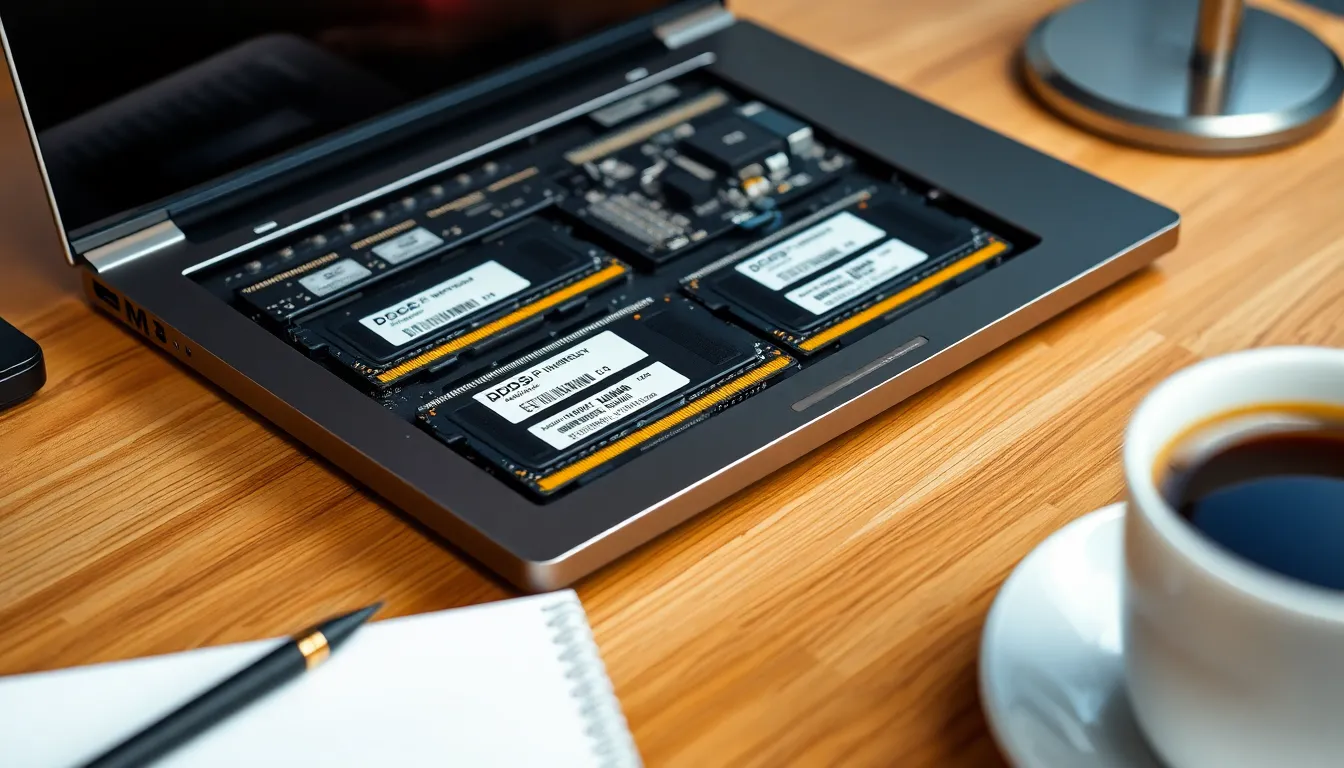
Laptop RAM plays a vital role in overall system performance. With adequate RAM, tasks run smoothly, reducing lag and improving responsiveness.
Performance Impact
Performance significantly depends on the amount and type of RAM. Higher RAM capacities enable faster processing, allowing laptops to execute tasks without delays. Systems equipped with DDR5 RAM, for instance, benefit from improved speeds and efficiency compared to earlier generations. Additionally, RAM’s speed, measured in MHz, affects the data transfer rate, further enhancing performance. A laptop with fewer RAM resources struggles to handle demanding applications, leading to sluggishness and frustration.
Multitasking Capabilities
Multitasking capabilities hinge on the RAM available in a laptop. When equipped with sufficient RAM, multiple applications can run concurrently without hindering system performance. Users can switch between programs seamlessly, increasing productivity. With 8GB to 16GB of RAM, laptops manage everyday tasks, such as browsing, document editing, and video conferencing, effectively. Users needing heavy multitasking, like those working with video editing software or running virtual machines, often require 32GB or more. Hence, choosing the right RAM type and capacity ensures optimal multitasking for diverse workloads.
Choosing The Right Laptop RAM
Selecting the right laptop RAM is crucial for enhanced performance and efficiency. Key factors include compatibility and capacity recommendations.
Compatibility Considerations
Ensure the chosen RAM matches the laptop specifications. Different laptop models support various RAM types like DDR4, LPDDR4X, and DDR5. Check the motherboard’s limits regarding size and type. Use manufacturer documentation or online databases for accurate information. If upgrading, verify existing RAM details to avoid mismatches. Keep in mind that dual-channel configurations improve performance, meaning choosing identical RAM modules is beneficial.
Capacity Recommendations
Capacity plays a significant role in overall system performance. For basic tasks, 8GB of RAM suffices for smooth operation. Users involved in moderate workloads typically require 16GB to handle multitasking effectively. Power users, engaged in intense applications or gaming, may need 32GB or more for seamless performance. Consider future needs; opting for more RAM now can prolong the laptop’s usability. Always assess specific software requirements as some applications demand higher capacities for optimal functioning.
Upgrading Laptop RAM
Upgrading laptop RAM enhances performance and multitasking capabilities. Such an upgrade can extend a laptop’s lifespan and improve overall user experience.
How To Upgrade
Start by identifying the laptop’s RAM specifications. Refer to the manufacturer’s documentation to determine compatibility. Next, power down the laptop and disconnect it from any power sources. Carefully remove the back panel, exposing the RAM slots. Insert the new RAM modules, ensuring they align properly in the slots. Finally, secure the panel back in place before powering on the device. It’s essential to check BIOS settings to confirm recognition of the new RAM.
Benefits Of Upgrading
Higher RAM capacities lead to smoother performance during multitasking. Users benefit from faster application loading times, reducing lag and enhancing efficiency. Increased memory allows multiple applications and tasks to run simultaneously without hindrance. Heavy users experience significant improvements in responsiveness, especially with demanding applications like video editing software or games. Upgrading RAM also supports future software needs, accommodating updates and more intensive applications over time. Overall, a RAM upgrade serves as a cost-effective solution to enhance laptop functionality and user satisfaction.
Investing in the right laptop RAM is vital for achieving optimal performance and enhancing user experience. With various types and capacities available understanding specific needs can lead to significant improvements in multitasking and responsiveness. Whether it’s for everyday tasks or intensive applications adequate RAM ensures that laptops can handle multiple processes efficiently.
Upgrading RAM not only extends a laptop’s lifespan but also prepares it for future software demands. By selecting compatible and sufficient RAM users can enjoy smoother performance and faster application loading times. Prioritizing RAM is an essential step toward maximizing a laptop’s potential and ensuring it meets evolving needs.